
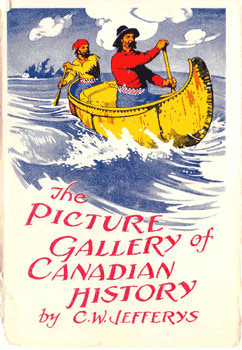
The Picture Gallery of Canadian History Vol. I
Jefferys, Charles W. The Picture Gallery of Canadian History Vol. I, Toronto, Ryerson, 1942. 262 p. Illus.
The Picture Gallery of Canadian History Vol. I
Title: The Picture Gallery of Canadian History Vol. I
Author: C. W. Jefferys
Publisher: Toronto, Ryerson, 1942. 262 p. Illus.
Buy a copy online at AbeBooks
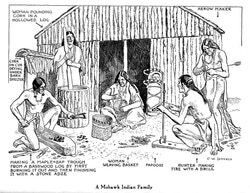
Woman pounding corn in a hollowed log.
Corn on cob drying under bark shelter.
Arrow maker.
Making a maple sap trough from a basswood log by first burning it out and then finishing it with a stone adze.
Woman weaving a basket.
Papoose.
Hunter making.
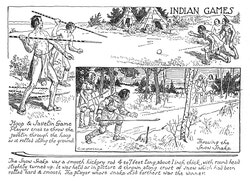
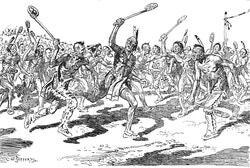
Lacrosse was developed from an Indian ball game in which a large and variable number of players took part. The name was given by the French on account of the stick by which the ball was caught and thrown.
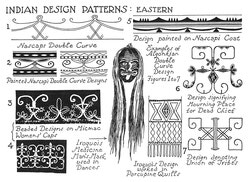
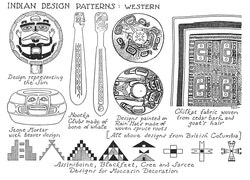
The Indians decorated their clothing, utensils, weapons, etc., with designs created by themselves, and applied by means of painting, carving, incising, weaving and embroidery.
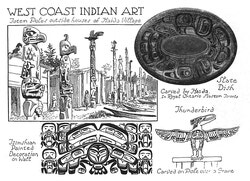
The Indians decorated their clothing, utensils, weapons, etc., with designs created by themselves, and applied by means of painting, carving, incising, weaving and embroidery.
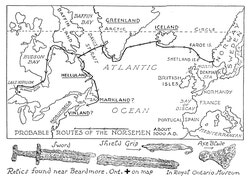
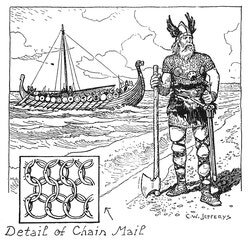
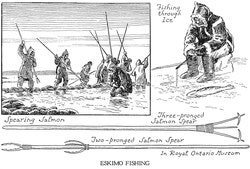
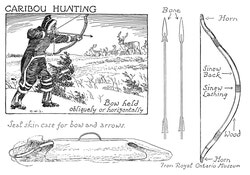
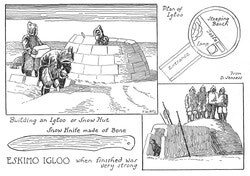
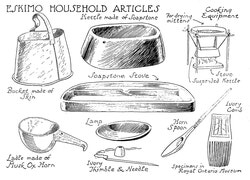
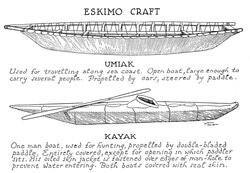
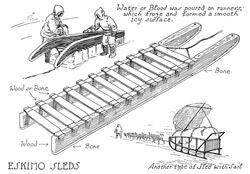
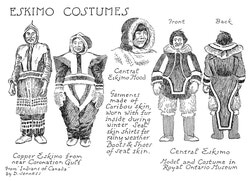
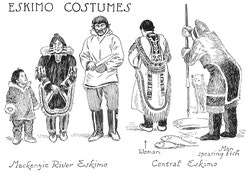
Though the Eskimo differ from the Indians in so many ways, it is probable that both are descended from the Mongolian stock of Asia. Some of the ruins of their prehistoric dwellings and camping places show traces of their contact with the Norsemen.
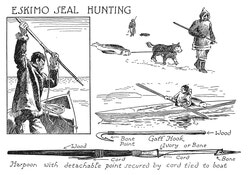
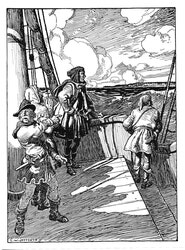
Many men had dreamed of a way to the Orient by a western voyage. Among them was another native of Genoa, Giovanni Cabotto, or John Cabot,* as later he came to be called.
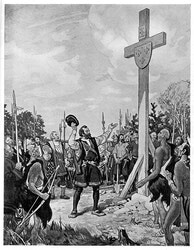
Throughout the early years of the 16th century hundreds of fishing vessels flocked from the western ports of England, France and Spain to Newfoundland and the Gulf of St. Lawrence. Foremost among these hardy and semi-piratical sea rovers...
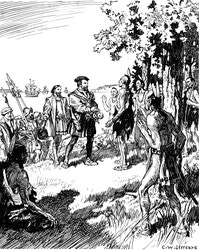
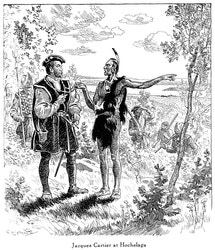
Cartier's own account tells us that the Indian chief, seizing the silver chain of the whistle hanging round his neck, which he used for giving signals on ship-board, and pointing to the handle of a dagger made of copper gilt like gold...
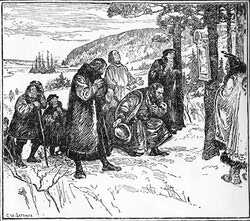
During the winter of 1535-1536, which Cartier's company spent in the neighbourhood of Stadacona (now Quebec), they suffered severely from scurvy, a disease caused by eating too much salt meat, and the lack of fresh fruit and vegetables.