
The Picture Gallery of Canadian History Vol. II
Jefferys, Charles W. The Picture Gallery of Canadian History Vol. II
Toronto, Ryerson, 1945. 260 p. Illus.
The Picture Gallery of Canadian History Vol. 2
Title: The Picture Gallery of Canadian History Vol. 2
Author: C. W. Jefferys
Publisher: Toronto, Ryerson, 1945. 271 p. Illus.
Buy a copy online at AbeBooks
Table of Contents
References
- Dr C. W. Jefferys was one of Canada's foremost historical artists and his three-volume Picture Gallery of Canadian History is probably his best-known achievement. His hundreds of carefully researched pictures of artefacts, people, places and episodes from Canadian history provide a "treasure house of information about this country's past" (Toronto Star).
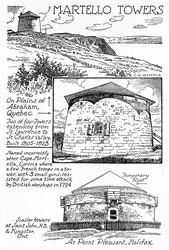
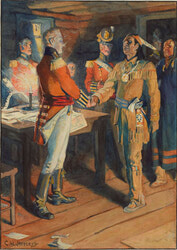
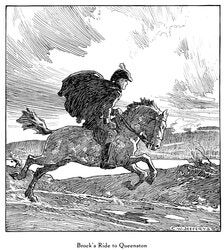
The first attempt at invasion by the Americans had failed at Detroit. Along the Niagara River gathered another American army. The summer passed into fall without an attack; but every week brought more troops and greater preparations by the enemy.
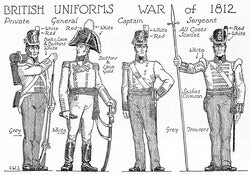
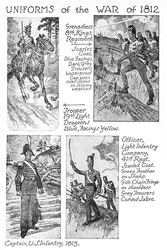
British regiments or battalions consisted normally of ten companies, two of which were composed of specially selected men: a Light Infantry company, of active, alert men, generally good marksmen, employed as skirmishers, and a Grenadier company of the...
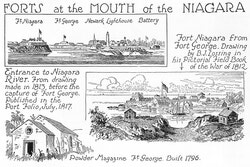
The pictures of the battlefields of Beaver Dams and Stoney Creek, and of the forts at the mouth of the Niagara are from sketches by Benson J. Lossing...
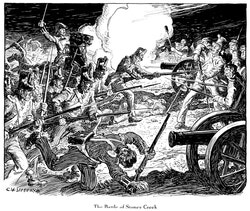
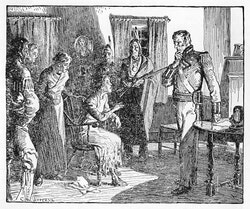
The spring of 1813 was a time of gloom and disaster in Upper Canada. The war with the United States pressed heavily on the country. Brock, the inspiration of its defence, had been killed at Queenston in October. York...
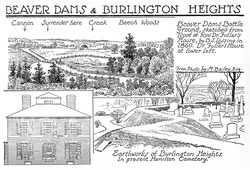
The pictures of the battlefields of Beaver Dams and Stoney Creek, and of the forts at the mouth of the Niagara are from sketches by Benson J. Lossing...
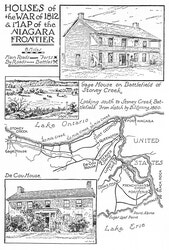
The Gage house, on the battlefield of Stoney Creek, is still standing, though its western portion, used as a store, was torn down about 1896.
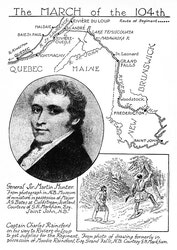
The 104th Regiment was formed in 1810 out of the New Brunswick Fencibles, raised in 1803, and was incorporated in the British regular Army.
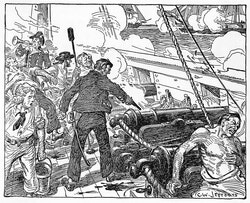
It is said that in the battle of Lake Erie, owing to insufficient and defective fuses, the cannon of Barclay s fleet had to be fired by discharging pistols into their touch-holes.
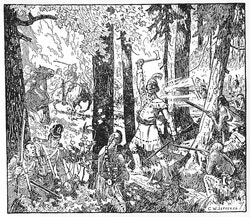
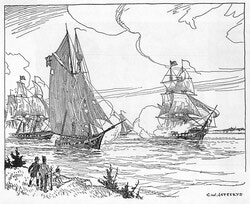
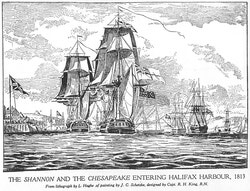
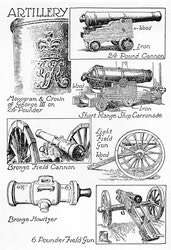
Artillery in Canada during the period covered by this volume consisted of two kinds: stationary cannon, generally of large calibre, used for the defense or siege of forts, and on board warships...
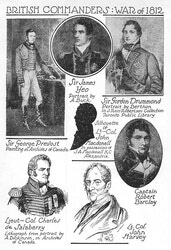
British officers wore the traditional scarlet coat, with a crimson sash around the waist and knotted at the left. American officers uniforms were dark blue, and lacked the sash.
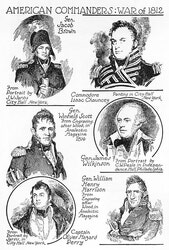
Observe the high collars, reaching to the ears, worn by superior officers, especially Americans, and the cocked hats, worn broadside. Also note that the faces were clean shaven, except for a very small crescent-shaped side whisker.
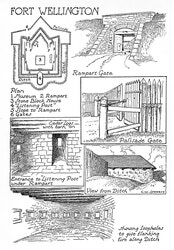
Fort Wellington is situated on the eastern outskirts of Prescott, Ont., on the St. Lawrence. It is an excellent specimen of the earthwork and palisaded fortifications of the period, and remains as it was when completed in 1837.
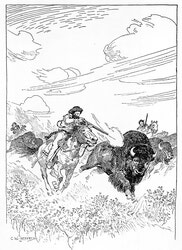
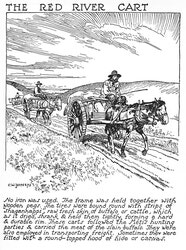
The Red River cart was first used by the Métis to carry meat from the buffalo hunt and in farm work. Later, they would be used in brigades to transport goods over long distances.